

Best RFID Blocking Card: Consumer Verification Analysis Examines Wallet Defender Signal-Blocking Technology as January Search Volume Reaches Post-Holiday Peak
Publication addresses verification gap for consumers conducting post-advertisement due diligence on RFID protection products; analysis examines Wallet Defender passive electromagnetic interference technology, business legitimacy framework, and Self-Assessment criteria as contactless card security searches increase across major U.S. transit markets
NEW YORK CITY, NY, Jan. 06, 2026 (GLOBE NEWSWIRE) -- Disclaimer: This article is for informational purposes only and does not constitute security advice, financial guidance, or professional recommendations. This report uses "best RFID blocking card" to reflect common consumer search language following product advertisements; the term represents search behavior and marketing category terminology, not an independent conclusion that any specific product is objectively superior for all individuals. Products discussed are positioned as personal security accessories utilizing passive electromagnetic interference technology, not government-certified security devices. Product claims and policies are best reviewed directly through current official brand materials. This article contains affiliate links; if purchases occur through these links, commissions may be earned at no additional cost to readers. This compensation does not influence the informational content of this report.
View the current Wallet Defender offer (official Wallet Defender page)
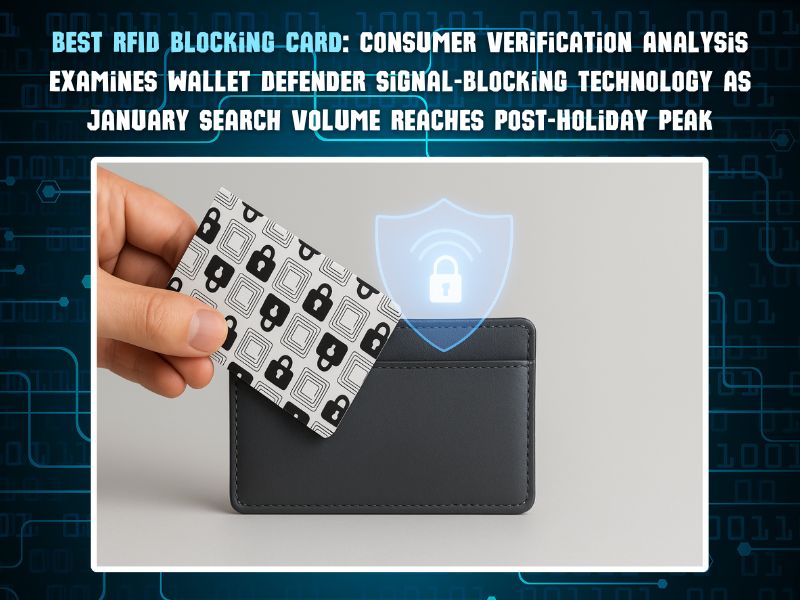
Market Context: January 2026 Consumer Security Product Search Patterns
Consumer search behavior patterns indicate January is commonly associated with elevated research activity in personal security accessory categories. This pattern reflects convergent factors including New Year resolution psychology, post-holiday financial review periods, and accumulated travel exposure reflection following November-December peak travel seasons.
Search Volume Indicators: Industry observation of consumer search patterns documents elevated query volumes for RFID protection terminology during early January periods. Searches including "best RFID blocking card," "RFID protection 2026," "contactless card security," and brand-specific verification queries increase as consumers transition from holiday spending to security planning mindsets.
Post-Holiday Travel Reflection: Public travel reporting commonly reflects elevated air travel volumes during late December holiday periods. Consumers returning from crowded airports, international destinations, and tourist areas during this window subsequently demonstrate increased interest in security measures addressing environments they recently navigated. The January search pattern reflects this retrospective exposure awareness.
Verification Resource Gap: Analysis of existing search results for RFID blocking product queries reveals predominant manufacturer marketing content, thin affiliate articles, and dated comparison lists. Limited resources address the specific verification needs of consumers conducting post-advertisement due diligence. This publication addresses that documented gap with comprehensive verification framework methodology.
Category Growth Trajectory: Market observation tracking RFID blocking product interest indicates continued category expansion correlating with contactless payment adoption rates. As financial institutions accelerate tap-to-pay card issuance and merchant terminal deployment, consumer awareness of contactless card security considerations has increased proportionally.
View the current Wallet Defender offer (official Wallet Defender page)
Why This Verification Analysis Publishes Now: The January 2026 Digital Security Moment
Three converging consumer behavior patterns contribute to increased interest in RFID blocking verification resources as 2026 begins:
Pattern 1: New Year Security Resolution Psychology
January consistently represents peak periods for personal security product research as consumers implement fresh-start mindset improvements across financial protection, identity safeguarding, and daily routine optimization. When consumers encounter targeted social media advertisements showing RFID scanning demonstrations, credit card protection messaging, and identity theft awareness positioning, immediate skeptical Google searches follow. Search queries including "best RFID blocking card," "Wallet Defender review," "does RFID blocking work," and "is RFID theft real" are commonly observed as viewers conduct due diligence before purchase momentum dissipates.
Pattern 2: Post-Holiday Travel Recovery Window
Early January marks concentrated international travel return periods, airport transit exposure reflection, and resumption of daily commuting patterns after holiday breaks. Consumers returning from crowded airports, tourist destinations, and public transit systems during late December holidays increasingly search for protective measures addressing environments they recently navigated. The realization hits during that first January subway commute or while reviewing holiday travel photos: "I spent a lot of time in crowded places during travel." This seasonal pattern creates optimal timing for consumers establishing consistent security routines heading into 2026.
Pattern 3: Post-Advertisement Verification Gap
Existing search results for RFID blocking card queries predominantly feature manufacturer marketing, thin affiliate content, or outdated comparison lists. None adequately address the specific verification needs of skeptical consumers conducting post-advertisement due diligence. This analysis fills that gap by providing legitimacy verification framework, realistic technology education, company claim evaluation criteria, and Self-Assessment Framework specifically structured for consumers who saw advertisements and immediately searched for independent confirmation before purchasing.
This consumer verification analysis publishes precisely when search demand peaks, serving the convergence of New Year security motivation, post-holiday travel awareness, and verification information scarcity.
Previous Coverage and Ongoing Consumer Interest
This analysis builds upon ongoing consumer education efforts examining RFID blocking technology and Wallet Defender specifically. Previous independent analyses published through major financial news platforms and newswire distribution channels have documented sustained consumer interest in verification resources for this product category.
For readers seeking additional context, previous coverage includes:
- RFID Wallet Security: Alternative Wallet Protection Technology — Detailed technology assessment examining Wallet Defender's electromagnetic shielding specifications and market positioning within the broader RFID protection landscape.
- Wallet Defender Reports Seasonal Surge in Consumer Interest — Comprehensive seasonal analysis documenting the correlation between holiday travel periods and consumer inquiry volumes for RFID blocking products.
- Wallet Defender Expands RFID Blocking Product Availability — Market expansion coverage examining product distribution developments and category growth indicators.
These prior analyses established foundational technology education and company verification frameworks that this January 2026 publication extends with updated market context, expanded Self-Assessment Framework methodology, and refined guidance addressing the specific search patterns characterizing New Year security resolution behavior.
Terminology Context: Throughout this report, "best RFID blocking card" reflects consumer search behavior and advertising language rather than a security industry classification. Products positioned within this category utilize passive electromagnetic interference materials designed to affect radio frequency signals. They are consumer security accessories, not government-certified protection devices or financial institution security products.
View the current Wallet Defender offer (official Wallet Defender page)
Understanding Post-Advertisement Search Intent: What "Best RFID Blocking Card" Searches Actually Mean
When consumers search "best RFID blocking card" within minutes of seeing social media advertisements, they conduct urgent verification research driven by skepticism competing with emotional purchase momentum. Understanding this psychology helps frame what verification actually requires.
The Emotional Journey From Advertisement to Search
Stage 1 — Advertisement Reaction: Consumer encounters targeted ad showing dramatic RFID scanning demonstrations. Internal response: "Wait, hackers can steal my credit card through my pocket? Is this real?"
Stage 2 — Personal Application: Mental calculation begins. "I was just in a crowded airport last week. I use tap-to-pay constantly. My wallet is literally broadcasting my card numbers?" The threat becomes personal.
Stage 3 — Skepticism Activation: Protective doubt emerges. "Hold on. Is this actually a real threat or fear-mongering to sell products? Is this company legitimate? Does this technology actually work?"
Stage 4 — Verification Search: Immediate Google search using variations like "best RFID blocking card," "Wallet Defender review," "does RFID blocking work," or "is RFID blocking necessary" seeking independent confirmation.
Stage 5 — Information Synthesis: Compilation of verification signals across multiple sources, checking for consistency versus contradiction, assessing whether information addresses specific concerns versus recycling marketing claims.
This analysis serves Stage 4-5 needs by providing comprehensive verification framework addressing actual searcher concerns.
The Three Simultaneous Verification Needs
Need 1: Legitimacy Verification
Is this advertised product legitimate or social media scam? Does the company actually exist with verifiable business operations? Are payment methods secure? Do return policies exist with clear terms? Can customer service be reached?
Need 2: Technology Reality Assessment
Does RFID blocking technology actually work? Is this relevant to my specific cards and security situation? What does RFID blocking actually protect against — and critically, what does it NOT address? Is the threat real or manufactured?
Need 3: Value and Risk Evaluation
Does pricing align with category norms? What verification signals indicate authentic product versus counterfeit? How do I assess whether company claims warrant investigation versus dismissal? What happens if I'm unsatisfied?
Understanding "best" requires establishing evaluation criteria rather than declaring winners. This analysis does not determine which product is objectively "best" because individual security concerns, card types carried, travel frequency, environmental exposure patterns, and risk tolerance create vast variability making universal superiority claims impossible.
RFID Technology Education: What Protection Actually Addresses
Before evaluating any RFID blocking product, understanding the underlying technology helps consumers assess relevance to their specific security situation. This education section provides foundation for informed decision-making.
Contactless Payment Card Technology Foundation
Modern credit and debit cards embed radio frequency identification chips operating at 13.56 MHz frequency enabling wireless tap-to-pay transactions. When cardholders present cards near payment readers, electromagnetic fields power passive chips and facilitate brief data exchange. This architecture eliminates physical card insertion requirements while creating the wireless communication pathway that RFID blocking products address.
The same RFID technology appears in electronic passports, hotel key cards, workplace access credentials, transit passes, and building entry badges utilizing similar frequency ranges and proximity-based wireless communication.
The Theoretical Wireless Scanning Scenario
Digital security education describes theoretical scenarios where unauthorized individuals might attempt using portable RFID readers in crowded environments to wirelessly access contactless card data through clothing, bags, or wallets. Proximity requirements typically limit effective communication to several inches for standard payment cards.
High-Exposure Environments Commonly Cited:
Sustained close-proximity situations present in airport security lines where travelers stand inches apart for extended periods. Crowded subway cars during rush hours in major metropolitan areas including New York, Chicago, Washington DC, and San Francisco create similar proximity conditions. Dense shopping mall crowds during sales events, tourist attraction queue lines, public transit during commuting peaks, concert and festival attendance, and theme park lines represent environments where extended close contact with strangers occurs.
Modern Card Security Architecture Context
Payment card industry representatives emphasize that contemporary contactless cards implement multiple integrated security layers. These include dynamic encryption generating unique codes for each transaction, tokenization systems substituting actual card numbers with single-use identifiers, strict proximity requirements, transaction value limits, and real-time fraud monitoring systems.
Financial industry security professionals note that documented successful RFID skimming in real-world scenarios remains statistically uncommon compared to substantially higher-prevalence fraud methods. Phishing attacks, merchant data breaches, compromised e-commerce platforms, and physical card theft represent statistically more frequent concerns affecting consumers.
Balanced Consumer Decision Framework
Consumers should evaluate RFID blocking based on personal security philosophy, travel frequency, typical environmental exposure, and comprehensive protection preferences. Individuals conducting frequent international travel, daily metropolitan transit commuting, or regular exposure to crowded public spaces may view portable blocking as reasonable supplemental consideration within broader security routines.
The decision reflects individual circumstances, security comfort levels, risk tolerance, and preferences for proactive versus reactive protection approaches. Neither position is inherently correct.
What RFID Blocking Technology Can and Cannot Address
RFID Blocking Technology Is Designed To Support:
Creating electromagnetic interference intended to affect wireless signals targeting contactless cards operating at standard frequencies. Providing passive, maintenance-free operation requiring no batteries, charging, apps, or ongoing attention. Fitting existing wallet configurations without requiring accessory replacement or behavior change. Complementing comprehensive security practices alongside transaction monitoring and fraud alerts.
RFID Blocking Technology Is Not Designed To Address:
Phishing emails, text messages, or social engineering attacks targeting credentials. Merchant data breaches affecting stored payment information at retailers. Online transaction fraud on e-commerce platforms. Physical wallet theft or card skimming at payment terminals. ATM skimming devices or compromised payment readers. Account credential theft through database breaches. Mail theft of new cards or statements. Shoulder surfing of PIN entries.
The Fundamental Principle: RFID blocking is specifically designed to address one vulnerability category — contactless card wireless scanning scenarios. It should be evaluated as one component within comprehensive financial security rather than complete protection against all identity theft methods. Consumers expecting complete protection from RFID blocking alone should adjust expectations regardless of which product they evaluate.
Previous technology education analyses distributed through financial news channels have documented this scope limitation framework, establishing consumer expectation calibration as a prerequisite for product category satisfaction.
Wallet Defender: Product Positioning and Company Verification Framework
This section examines Wallet Defender specifically, providing the legitimacy verification framework post-advertisement searchers require. All claims in this section are attributed to company materials or independently verifiable sources.
Product Category and Positioning
According to publicly available product information and company marketing materials:
What Company Materials Describe: The official Wallet Defender website positions the product as a credit card-sized passive electromagnetic interference device featuring signal-blocking technology described as designed to affect RFID frequencies. According to the company, the product requires no batteries, apps, or charging. The company describes the construction as waterproof and crush-resistant. The product is designed for placement alongside contactless cards in standard wallets.
Multi-Card Coverage Claim: According to the brand, single card placement is intended to provide coverage for multiple cards within typical wallet proximity, reducing the need for individual card sleeve requirements for each card carried.
Important Clarification: Products in this consumer security accessory category are not government-certified security devices or financial institution security products. They utilize passive electromagnetic interference materials designed to affect radio frequency signals. This represents product category reality, not criticism of any specific product.
Company Marketing Positioning Elements
According to Wallet Defender marketing materials:
Passive Protection Emphasis: The brand highlights always-active protection positioning without batteries, charging, or software requirements. This positioning targets consumers preferring maintenance-free security accessories over solutions requiring ongoing attention or subscription fees.
Wallet Compatibility Focus: Credit card form factor marketed for compatibility with existing wallets without requiring accessory replacement, wallet switching, or carrying additional items.
Durability Marketing: Waterproof, crush-resistant construction described for travel exposure and daily carry durability. According to the company, the product is designed to last for years of continuous use.
Security Expert Positioning: According to the brand's marketing materials, the product is marketed using language referencing security expert recommendations. This represents the company's marketing positioning, and consumers can request details on this claim directly from the company if it is a deciding factor in their evaluation.
What Company Marketing Does NOT Claim
Notably, product materials reviewed do not position Wallet Defender as:
A government-certified security device or financial institution security product. Complete identity theft prevention eliminating all fraud risk. A replacement for transaction monitoring, careful online behavior, or other security practices. Protection against phishing, data breaches, online fraud, or physical theft.
This restraint in company claims represents appropriate positioning for consumer security accessories in this category.
Legitimacy Verification: Business Operations Assessment Framework
After seeing advertisements, legitimacy verification represents the primary purchase barrier for skeptical consumers. Here is a systematic business verification approach addressing common concerns.
Company-Listed Business Information
According to publicly accessible company materials:
Corporate Distribution: The product is distributed by The GiddyUp Group, Inc., with business address listed at 20 N. Oak St., Ventura, CA 93001 USA. This represents verifiable corporate registration information.
Contact Method Accessibility: The company provides contact channels including email at support@toptechtoday.com and contact form availability through the official website. Consumers can verify responsiveness before purchasing by sending inquiries.
Professional Web Infrastructure: The official website features secure payment processing with HTTPS encryption and recognized payment processors, published return policy with defined terms, privacy policy and terms of service documentation, and comprehensive product information and feature descriptions.
Direct Distribution Model: Company marketing emphasizes official website purchasing for authenticity assurance and customer service access. This direct-to-consumer approach provides clearer accountability compared to third-party marketplace purchases.
Verification Actions Consumers Should Take
When researching any direct-to-consumer security accessory brand, consider:
Testing customer service responsiveness by sending a pre-purchase question via the contact method provided. Reviewing the published return policy to understand the window, conditions, and process before ordering. Confirming secure checkout indicators including HTTPS encryption and recognized payment processor logos. Checking for consistency across publicly available company information. Verifying business registration details through state corporate registries if desired.
Red Flags Requiring Additional Investigation
Consumers should exercise additional caution when encountering: inability to reach customer service through published contact methods, refusal to provide product specification information upon request, payment processing requiring unusual methods such as wire transfer or cryptocurrency only, extreme pressure tactics including countdown timers creating false urgency or repeated "final chance" messaging, and unrealistic guarantees claiming complete identity theft prevention without limitations.
Critical Distinction: Business Legitimacy Does Not Equal Product Effectiveness
Business legitimacy verification establishes: Company exists as registered entity with verifiable distribution. Contact methods function and support is accessible. Payment processing is secure through recognized providers. Return policies exist with clear, published terms. Professional business operations infrastructure is present.
Business legitimacy does NOT verify: RFID blocking effectiveness in all scenarios and conditions. Marketing claim accuracy for all stated benefits. Suitability for individual security situations and card types. Comparative superiority versus alternative products or methods.
Assessment Based on Verifiable Information: Based on publicly verifiable information, Wallet Defender demonstrates characteristics of legitimate business operations including established corporate distribution, accessible customer service, professional web infrastructure, and direct distribution model with clear accountability. However, business legitimacy differs fundamentally from guaranteed product effectiveness. Legitimate companies offer products where individual experiences vary based on usage patterns, card types, environmental factors, and implementation consistency.
This assessment reflects publicly available company information and general market context previously discussed across financial news and newswire distribution channels.
View the current Wallet Defender offer (official Wallet Defender page)
Consumer Self-Assessment Framework: Twelve Critical Questions Before Purchase
Rather than declaring any product universally "best," this framework helps individual fit assessment. Honest answers guide whether RFID blocking aligns with your specific situation.
Security Concern and Goal Clarity
Question 1: What specific security concern am I addressing?
If your concern is contactless card wireless scanning, RFID blocking category alignment exists. If your concern is general identity theft from all sources, comprehensive security strategy is needed since RFID blocking addresses only one component. If concerns are unclear or broad, clarify your specific threat model before purchasing any solution.
Question 2: Do I frequently encounter high-exposure environments?
Higher exposure patterns include regular airport travel, daily public transit commuting in major metropolitan areas, frequent attendance at crowded retail environments, concerts, festivals, sporting events, or theme parks. Lower exposure patterns include primarily home-based routines, private vehicle transportation, and low-crowd environments. Mixed patterns should be evaluated based on highest-exposure scenarios.
Question 3: What cities or transit systems do I regularly use?
Daily commuters on the New York subway, Chicago L train, Washington DC Metro, San Francisco BART, Boston T, or Los Angeles Metro experience sustained close-proximity exposure patterns. Occasional users of these systems have different exposure profiles than daily riders.
Question 4: Do I prefer proactive or reactive security approaches?
Proactive mindset valuing prevention measures before incidents occur aligns with RFID blocking philosophy. Reactive approach relying primarily on transaction monitoring, fraud alerts, and dealing with issues as they arise may view RFID blocking as unnecessary addition. Neither approach is wrong; they reflect different security philosophies.
Format and Compatibility Assessment
Question 5: Does card-format protection fit my current wallet configuration?
Standard wallets with card slots accommodate card-format blockers without modification. Minimalist wallets, money clips, or non-standard configurations require physical fit verification before purchase. Consumers already owning RFID-blocking wallets may find card-format blockers redundant unless additional coverage is desired.
Question 6: Do I value maintenance-free security accessories?
Consumers preferring "set and forget" solutions align well with passive technology requiring no batteries, charging, apps, or ongoing attention. Consumers willing to maintain battery-powered or app-connected devices have additional format options beyond passive cards.
Expectation and Value Parameters
Question 7: Do I understand what RFID blocking specifically addresses?
If you understand RFID blocking specifically addresses contactless card wireless scanning and nothing else, your expectations are properly calibrated. If you expect complete identity theft prevention, expectations require adjustment before purchasing any RFID blocking product. If you understand this represents one component within comprehensive security practices, you are properly prepared.
Question 8: Does pricing fit my personal security accessory budget?
If the cost feels comfortable for the described protection scope, proceed with informed expectations. If the purchase represents financial stretch or budget concern, evaluate whether your concern level justifies the expense. Avoid comparing against comprehensive security service costs since these represent different protection categories.
Question 9: Am I purchasing from official verified sources?
Purchasing directly from the official website provides authenticity assurance, customer support access, and return policy coverage. Third-party marketplace purchases create authenticity uncertainty and limited recourse if issues arise.
Comprehensive Security Context
Question 10: Have I verified return policy terms before purchasing?
According to the company's published materials, orders include a 30-day money-back guarantee. Confirm current guarantee terms, timeframes, conditions, and refund processes directly with the company as these details remain subject to the brand's current policies.
Question 11: Am I considering gift purchase for someone else?
Gift purchases for parents, grandparents, or less tech-savvy family members require assessing recipient's actual exposure patterns and security needs rather than projecting your own concerns. Consider whether the recipient will actually use the product consistently.
Question 12: Have I considered RFID blocking within comprehensive security strategy?
If you view this as one component alongside transaction monitoring, careful online behavior, strong passwords, and awareness of phishing attempts, you have a holistic approach. If you expect RFID blocking alone to provide complete protection, expectations require adjustment regardless of which product you choose.
Decision Synthesis
These twelve questions help determine whether Wallet Defender — or any RFID blocking product — aligns with YOUR individual circumstances, realistic expectations, security philosophy, environmental exposure, and comprehensive protection strategy.
Informed purchase decisions based on personal fit assessment typically yield higher satisfaction than advertisement-driven impulse purchases. There is no universally correct answer; the right decision depends on your honest responses to these questions.
RFID Blocking Format Comparison: Cards vs. Wallets vs. Sleeves
Understanding delivery format differences helps consumers evaluate whether card-based RFID blocking aligns with personal needs versus alternative formats. Each approach has legitimate advantages and limitations.
Card-Based Passive Blockers
Format Characteristics: Credit card-sized passive electromagnetic interference device designed for wallet card slot placement alongside contactless cards. No batteries, charging, or maintenance required. Single device designed to cover multiple cards within proximity, according to manufacturers in this category.
Potential Advantages: Designed to fit existing wallet configurations without accessory replacement or wallet switching. Passive operation requires no user activation, app management, or ongoing maintenance. Portable across multiple wallets or bag configurations. Lower cost compared to integrated wallet replacement, typically ranging from fifteen to thirty dollars. Simple gift option for less tech-savvy recipients.
Potential Limitations: Requires wallet placement discipline for consistent positioning. Coverage depends on card proximity and specific wallet configuration. May not suit non-traditional wallet, cardholder, or money clip configurations. Results may vary based on wallet construction materials.
Integrated RFID-Blocking Wallets
Format Characteristics: Complete wallet replacement with built-in RFID blocking materials throughout construction. Entire wallet interior designed with shielding construction. Various style options from minimalist to traditional configurations available from multiple manufacturers.
Potential Advantages: Designed to provide comprehensive coverage for cards within wallet without positioning concerns. No separate device to maintain, position, or remember. Often includes quality construction and organizational features beyond blocking function. Protection is intended to be automatic regardless of card placement within wallet.
Potential Limitations: Higher cost typically ranging from eighty to two hundred dollars or more requiring complete wallet replacement. Style preferences may not align with available blocking wallet designs. Switching costs exist for consumers satisfied with current wallet aesthetics and organization.
Individual Card Sleeves
Format Characteristics: Single-card protective sleeves with RFID blocking materials designed to provide individual coverage. Separate sleeve required for each card needing consideration. Various materials available from paper-based to metallic constructions.
Potential Advantages: Card-specific approach regardless of wallet type or configuration. Low individual unit cost. Easily replaceable if damaged or worn. Can address specific high-value cards while leaving others unshielded.
Potential Limitations: Multiple sleeves required for multiple cards creating bulk and complexity. Added wallet thickness with each sleeve added. Individual card removal required for each transaction. Easy to forget reinsertion after transactions.
Format Selection Framework
Choose Format Based On: Current wallet satisfaction level and replacement willingness. Number of contactless cards requiring protection. Budget parameters and cost-per-card considerations. Preference for comprehensive versus targeted protection. Maintenance tolerance and usage discipline. Gift-giving context and recipient preferences.
No Format Is Universally Superior: Individual preferences, wallet configurations, budget parameters, and usage patterns determine optimal format fit. Marketing claims about format superiority typically lack comparative substantiation across all use scenarios. The best format is the one you will actually use consistently.
Geographic and Lifestyle Considerations: Who Benefits Most
RFID blocking relevance varies significantly based on location, lifestyle, and daily routine patterns. This section helps consumers assess personal relevance.
High-Relevance Geographic Profiles
Major Metropolitan Daily Commuters: Consumers using public transit systems in New York City, Chicago, Washington DC, San Francisco, Boston, Los Angeles, Philadelphia, or other major metropolitan areas experience daily sustained close-proximity situations. Rush hour subway cars, crowded bus routes, and packed train platforms create the environmental conditions RFID blocking addresses. Daily commuting patterns can result in repeated close-proximity exposure throughout the year.
Frequent Airport Travelers: TSA security lines, gate areas, boarding queues, and baggage claim crowds create extended close-proximity situations. Business travelers logging 25 or more flights annually accumulate significant cumulative exposure. International travelers face additional exposure in foreign airports with different crowd management patterns.
Urban Residents in Dense Cities: Beyond transit, urban dwellers encounter crowds at grocery stores, restaurants, entertainment venues, and street-level retail. Population density correlates with close-proximity frequency regardless of transit usage.
Moderate-Relevance Geographic Profiles
Suburban Commuters with Occasional Urban Exposure: Primarily private vehicle transportation with periodic transit use, airport travel, or urban entertainment represents moderate exposure. Monthly or quarterly high-exposure situations may or may not justify ongoing protection depending on personal risk tolerance.
Occasional Travelers: Two to four flights annually for vacation or family visits represents lower but non-zero exposure. Protection value depends on destination characteristics and personal security philosophy.
Lower-Relevance Geographic Profiles
Rural or Low-Density Suburban Residents: Primarily private vehicle transportation, minimal crowd exposure, rare public transit usage, and infrequent air travel represents the lowest exposure profile. The cost-benefit calculation differs significantly from urban daily commuters.
Lifestyle Factors Beyond Geography
Event Attendance Patterns: Concert goers, festival attendees, sporting event fans, and theme park visitors encounter dense crowd situations regardless of residential location. Seasonal exposure spikes during event seasons may influence protection decisions.
Shopping Patterns: Black Friday crowds, holiday shopping rush, and popular retail locations create periodic high-exposure situations even for otherwise low-exposure individuals.
International Travel Destinations: Some high-traffic tourist destinations are frequently discussed in general travel-safety conversations. Asian megacities including Tokyo and Hong Kong feature extremely crowded transit systems. Travelers to these destinations may value additional protection layers.
Realistic Expectations: Setting Yourself Up for Satisfaction
Consumer satisfaction with RFID blocking products depends more on expectation calibration and understanding of design intent than objective product superiority rankings. This section establishes realistic expectations.
What Reasonable Expectations Look Like
Reasonable Expectation: "This is designed to provide one additional layer of consideration against one specific scenario as part of my overall security practices."
Reasonable Expectation: "I understand this is designed to address wireless card scanning specifically, and I will continue monitoring my statements and practicing good online security."
Reasonable Expectation: "The peace of mind value in crowded situations may be worth the cost to some consumers based on personal preferences."
Reasonable Expectation: "I will position this in my wallet and not think about it again unless I change wallets."
What Unreasonable Expectations Look Like
Unreasonable Expectation: "This will address all identity theft and fraud scenarios."
Unreasonable Expectation: "I no longer need to monitor my credit card statements or practice online security."
Unreasonable Expectation: "This guarantees no one can ever compromise my financial information."
Unreasonable Expectation: "This replaces credit monitoring services, fraud alerts, and careful online behavior."
The Peace of Mind Question
Some consumers value peace of mind as a legitimate benefit independent of threat probability assessment. If knowing you have a product designed to address certain scenarios in crowded situations provides genuine stress reduction during travel or commuting, that psychological benefit has real value regardless of statistical threat prevalence debates.
Other consumers prefer evidence-based spending, directing security investments toward statistically more common concerns. Neither approach is wrong; they reflect different value frameworks and risk tolerances.
Long-Term Usage Considerations
Passive RFID blocking cards require no ongoing attention, subscription fees, battery replacement, or software updates. Once positioned in your wallet, the product is designed to operate without degradation under normal use conditions according to manufacturers in this category.
This "set it and forget it" characteristic appeals to consumers who want security measures that do not require ongoing management or attention. Consumers who prefer active engagement with their security tools may find passive approaches less satisfying psychologically even if comparably functional.
Pricing, Guarantee, and Purchase Information
Pricing Information
According to the official Wallet Defender website, purchase options are available with potential volume discounts for multi-unit purchases. Readers should confirm current pricing, terms, and any promotional offers directly with the brand as these details are subject to change without notice.
Pricing Category Context: Card-format RFID blockers typically range from fifteen to thirty dollars for single units, with multi-packs offering per-unit discounts. This positions the category as a modest cost compared to RFID-blocking wallet replacements typically ranging from eighty to two hundred dollars.
Satisfaction Guarantee Information
According to the company's published materials, orders are protected by a 30-day money-back guarantee. This provides evaluation window for consumers uncertain about product fit.
Readers should confirm current guarantee terms, timeframes, conditions, and refund processes directly with the company as these details remain subject to the brand's current policies. Review the complete return policy on the official website before ordering.
Authentic Product Sourcing Guidance
Recommended Sourcing — Official Website: Purchasing through official channels provides authentic product verification reducing counterfeit risk, proper handling from manufacturer to consumer, direct customer support access for questions or concerns, accurate product specifications and feature descriptions, return policy coverage under company terms, and product authenticity assurance.
Caution Advised for Third-Party Marketplace Sellers: Purchasing from non-official marketplace sellers creates risks including counterfeit product possibility, improper storage conditions potentially affecting materials, no official customer support access or limited recourse for issues, complicated or impossible return processes, and uncertainty about product authenticity and manufacturing standards.
View the current Wallet Defender offer (official Wallet Defender page)
Frequently Asked Questions: Post-Advertisement Verification Queries
Is Wallet Defender Legitimate or a Scam?
Based on verifiable information, Wallet Defender demonstrates legitimate business operation characteristics including established corporate distribution through The GiddyUp Group, Inc. in Ventura, California, accessible customer service contact methods, professional website infrastructure with secure payment processing, published return policy with defined terms, and direct distribution model emphasizing official website purchasing.
These indicators suggest legitimate business operations with standard commercial practices within the consumer security accessory category.
Critical Distinction: Business legitimacy differs fundamentally from product performance guarantees. Legitimate companies offer products where individual experiences vary based on usage patterns, card types, environmental factors, and implementation consistency.
People searching "scam" typically seek answers about whether the business is legitimate, whether claims are transparent, and whether recourse exists if unsatisfied. Evidence indicates legitimate business operations; individual product experiences vary based on numerous factors within user control and environment.
Does RFID Blocking Technology Actually Work?
RFID blocking technology utilizes passive electromagnetic interference materials designed to affect radio frequency signals in the 13.56 MHz range used by contactless payment cards. The technology is designed to operate through material properties creating signal interference between external readers and cards positioned nearby.
Individual results depend on proper placement within wallet configuration, card proximity to blocking materials, wallet design and card positioning, and consistent usage discipline maintaining proper positioning.
Important Context: Documented successful RFID skimming in real-world scenarios remains statistically uncommon compared to phishing, data breaches, online fraud, and physical theft. RFID blocking is designed to address a specific theoretical vulnerability rather than the most statistically prevalent identity theft methods. This context should inform but not necessarily determine purchase decisions.
Do I Actually Need RFID Blocking Protection?
Need assessment depends entirely on individual circumstances:
Higher Relevance Scenarios: Frequent international travel with airport exposure. Daily metropolitan public transit commuting on crowded systems. Regular crowded retail environment shopping and event attendance. Personal preference for proactive measures. Peace of mind value in security accessories. Previous identity theft experience creating heightened vigilance.
Lower Relevance Scenarios: Primarily home-based routines with limited public exposure. Private vehicle transportation patterns with rare transit use. Already using RFID-blocking wallet making additional card potentially redundant. Reactive security philosophy relying on monitoring rather than prevention. Budget prioritization toward other security measures or different concerns.
No universal "need" exists. Individual circumstances, exposure patterns, risk tolerance, and security philosophy determine personal relevance. The Self-Assessment Framework above provides structured guidance for this determination.
What Is the Difference Between Card Blockers and RFID Wallets?
Primary differences involve approach, cost, and user experience:
Card Blockers: Individual device placed in existing wallet. Lower cost typically ranging from fifteen to thirty dollars. Maintains current wallet satisfaction and organization. Requires placement discipline for consistent positioning. Easy gift option for recipients with wallet preferences.
RFID Wallets: Complete wallet replacement with integrated protection. Higher cost typically ranging from eighty to two hundred dollars or more. Comprehensive built-in coverage without positioning concerns. Requires accepting new wallet design, organization, and aesthetics.
Neither approach is universally superior. Choice reflects budget, current wallet satisfaction, positioning discipline willingness, and aesthetic preferences.
Where Should I Buy to Ensure Authenticity?
Official website purchasing ensures authentic product rather than counterfeit, direct customer support access, return policy coverage under company terms, and accurate product information and specifications.
Third-party marketplace sellers create authenticity risks including counterfeits, limited support, and complicated returns. For products where authenticity affects functionality, official sourcing provides clearer accountability.
How Do I Know If My Cards Even Have RFID?
Most contactless payment cards issued in recent years include RFID capability, typically indicated by the contactless payment symbol resembling a sideways WiFi icon. Cards with tap-to-pay functionality contain the chips RFID blocking addresses. Check your cards for this symbol or contact your card issuer to confirm contactless capability. Cards requiring physical insertion only do not utilize RFID technology.
Will RFID Blocking Interfere With My Cards?
RFID blocking products are designed to affect external scanning attempts, not to damage cards or interfere with legitimate transactions. When you remove cards from your wallet for tap-to-pay transactions, they function normally at payment terminals. The blocking is intended to occur only while cards remain in proximity to the blocking material inside your wallet.
Can I Protect My Passport Too?
Modern electronic passports include RFID chips containing biometric data. Card-format RFID blockers placed near passports in travel wallets or passport holders may be designed to provide blocking for passport chips utilizing similar frequency ranges. However, passport-specific sleeves designed for passport dimensions may provide more consistent coverage for travel documents. Consumers should evaluate their specific travel document configuration.
The Bottom Line: Informed Decision Framework
For consumers who encountered RFID blocking product advertisements and immediately searched for verification using "best RFID blocking card," "Wallet Defender review," "does RFID blocking work," or related queries, this analysis has provided:
Search Term Context: "Best RFID blocking card" represents common consumer search language and marketing category terminology, not a security industry classification or independent superiority determination. Products marketed using this language utilize passive electromagnetic interference materials designed to affect radio frequency signals.
Technology Education: RFID blocking specifically addresses contactless card wireless scanning scenarios. It does not protect against phishing, data breaches, online fraud, physical theft, or the majority of identity theft methods. Understanding this scope calibrates realistic expectations. This education builds upon technology frameworks established in previous analyses distributed through financial news platforms.
Legitimacy Verification: Wallet Defender demonstrates legitimate business operation characteristics including established corporate distribution, accessible customer service, professional web infrastructure, and direct distribution model. However, business legitimacy differs fundamentally from product performance guarantees. Individual experiences vary based on usage patterns and implementation.
Self-Assessment Framework: Twelve questions help determine personal fit based on security concerns, environmental exposure, budget parameters, and comprehensive protection philosophy. Informed decisions based on individual circumstances yield higher satisfaction than advertisement-driven purchases.
Format Education: Card-format blockers represent one approach among alternatives including RFID-blocking wallets and individual sleeves. Each format has legitimate advantages and limitations. The best format is the one aligning with your wallet configuration, budget, and usage patterns.
Continuity With Previous Coverage: This January 2026 analysis extends verification frameworks established in previous Wallet Defender coverage published through major financial news syndication and newswire distribution channels, providing updated market context aligned with current New Year security resolution search patterns.
The Core Principle
Consumer satisfaction with RFID blocking products depends more on expectation calibration and understanding of protection scope than objective product superiority rankings. No product is universally "best" because optimal choice aligns with individual security philosophy, realistic expectations about what RFID blocking addresses, environmental exposure patterns, and integration within comprehensive security practices.
For consumers whose 2026 security goals include proactive contactless card considerations, products like Wallet Defender are positioned to provide passive electromagnetic interference in portable card format designed to fit existing wallets. For consumers expecting complete identity theft coverage or protection against all fraud methods, RFID blocking alone is not designed to fulfill those expectations regardless of which product they evaluate.
Informed choice — based on accurate technology understanding, realistic design intent expectations, honest self-assessment of security concerns, and verification through official channels — supports outcomes aligning with individual needs better than advertisement-driven impulse purchases.
View the current Wallet Defender offer (official Wallet Defender page)
Contact Information
For questions before or after ordering, according to the company's website:
Email: support@toptechtoday.com
Distributor: The GiddyUp Group, Inc., 20 N. Oak St., Ventura, CA 93001 USA
Website: https://getwallet-defender.com/
Contact Information Disclaimer: Details accurate as of January 6, 2026 publication date but subject to change without notice. Verify current contact information on official company website before attempting customer service contact.
Disclaimers
Editorial and Informational Purpose Disclaimer: This article provides consumer verification analysis for informational and educational purposes only. It does not constitute security advice, financial guidance, legal counsel, or professional recommendations. Information reflects publicly available company materials and general RFID technology education as of January 6, 2026 publication date. Security decisions should involve evaluation of individual circumstances and consultation with qualified professionals when appropriate.
Product Category Disclaimer: Products discussed are positioned as consumer security accessories utilizing passive electromagnetic interference technology. They are not government-certified security devices, financial institution security products, or designed to provide coverage against all identity theft methods. RFID blocking is specifically designed to address contactless card wireless scanning scenarios and is not designed to address phishing, data breaches, online fraud, physical theft, or other prevalent fraud methods.
Technology Disclaimer: RFID blocking technology is designed to affect electromagnetic signals in frequency ranges used by contactless payment cards and RFID-enabled documents. Results depend on proper implementation, card positioning, wallet configuration, and environmental factors. Documented successful RFID skimming remains statistically uncommon compared to other identity theft methods. Comprehensive security commonly includes transaction monitoring, careful online behavior, and situational awareness.
Results Variability Disclaimer: Individual experiences with RFID blocking products vary based on numerous factors including card types carried, wallet configuration, placement consistency, environmental exposure patterns, and usage discipline. This analysis does not independently verify performance claims and recommends consumers conduct evaluation during return policy windows.
FTC Affiliate Disclosure: This article contains affiliate links. If purchases occur through these links, commissions may be earned at no additional cost to readers. This compensation does not influence information accuracy, neutrality, editorial independence, or integrity. All descriptions reflect publicly available company information, general technology education, and verification framework guidance. Analysis maintains independence from company marketing objectives while acknowledging affiliate relationship.
Pricing and Terms Variability Disclaimer: All pricing and promotional information is subject to change without notice. Verify current pricing, terms, policies, promotional offers, and product availability on official company website before making purchase decisions. This analysis does not guarantee current pricing accuracy, promotional availability, or specific terms continuation.
Publisher Responsibility and Accuracy Disclaimer: The publisher of this verification analysis has made reasonable efforts to ensure information accuracy at time of publication based on available company materials, general technology education, and consumer verification framework principles. Publisher does not accept responsibility for errors, omissions, company policy changes, product modifications, or outcomes resulting from information use. Readers are strongly encouraged to verify all details directly with company customer service before making decisions. Publisher is not liable for individual outcomes, purchasing decisions, or reliance on information provided.
Business Legitimacy Versus Product Performance Disclaimer: Business legitimacy verification establishing registered corporate distribution, accessible customer service, secure payment processing, and published policies establishes company operates professionally but does not verify or guarantee product performance, individual outcomes, or marketing claim accuracy. Legitimate companies offer products where individual experiences vary based on usage patterns, implementation consistency, and environmental factors.
Comprehensive Security Disclaimer: RFID blocking is designed to address one specific vulnerability category. Comprehensive financial security requires attention across multiple areas including transaction monitoring, secure online practices, phishing awareness, careful merchant selection, and situational awareness. Consumers should not rely on any single security measure as complete coverage.
This consumer verification analysis was published January 6, 2026, and reflects information accurate as of that date. All company claims, product positioning, pricing information, and policy specifics should be independently verified through current official sources before making purchasing or security decisions.
View the current Wallet Defender offer (official Wallet Defender page)

Product Support: support@toptechtoday.com
Order Support: support@giddyup.io

Legal Disclaimer:
EIN Presswire provides this news content "as is" without warranty of any kind. We do not accept any responsibility or liability for the accuracy, content, images, videos, licenses, completeness, legality, or reliability of the information contained in this article. If you have any complaints or copyright issues related to this article, kindly contact the author above.
